

 AR
AR BG
BG CS
CS NL
NL FI
FI FR
FR DE
DE EL
EL HI
HI IT
IT JA
JA KO
KO PL
PL PT
PT RU
RU ES
ES SV
SV IW
IW ID
ID UK
UK VI
VI HU
HU TH
TH TR
TR FA
FA
Choice of a drilling machine can have a great impact on the success and ease of operation of the drilling process. Although a small shop that produces brackets may consider using the bench drill, an industry manufacturing metal parts with larger pieces may have to use the radial drilling machine. The vertical Drilling Machine lies somewhere in the middle and may serve for many general purposes. Every machine has its specific working range, setting up method, capacity and drilling area. But before making any decisions regarding any of these drilling machines, one should consider the dimensions and the material of the workpiece, kind of holes to be made, usage frequency and accuracy level.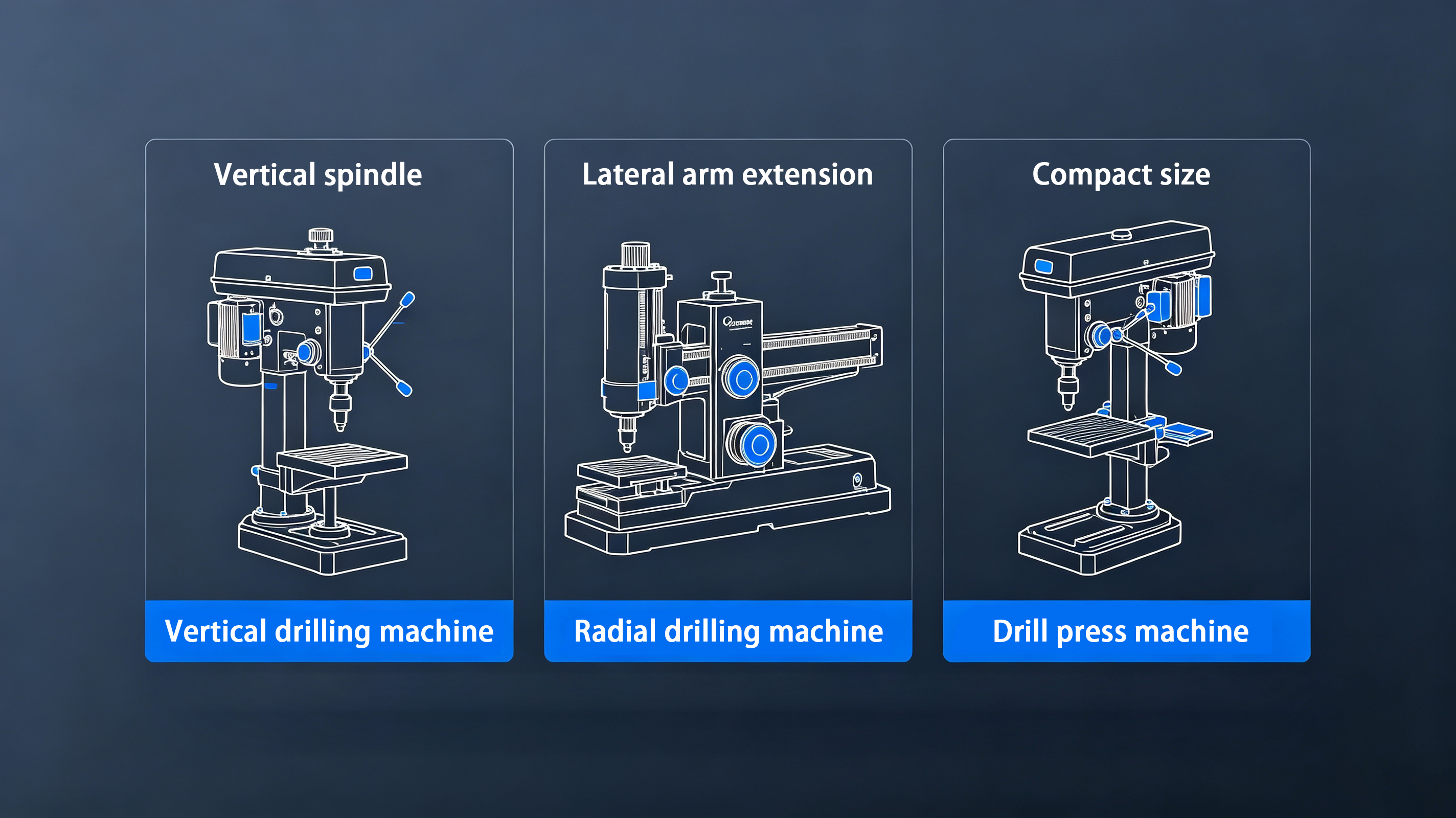
What is a vertical drilling machine?
A vertical drilling machine is a machine tool designed to drill holes with a spindle that moves straight up and down. The workpiece is usually placed and secured on a table below the spindle. Depending on the machine design, the table can often be adjusted to suit different workpiece sizes and drilling positions. The operator selects a suitable drill bit, sets the spindle speed, secures the material, and feeds the drill into the workpiece.
Vertical drilling machines are commonly used for steel plates, machine parts, brackets, flanges, and other metal components. For example, a small machine shop may use one to drill mounting holes in steel plates before assembling a frame. Compared with a bench drill, a vertical drilling machine generally offers a stronger structure, larger working range, and greater drilling capacity. When using one, make sure the workpiece is firmly clamped and choose the drill speed according to the material and drill diameter. This helps reduce vibration, improve hole quality, and protect the cutting tool.
What is a radial drilling machine?
A radial drilling machine is designed for drilling holes in large, heavy, or awkwardly shaped workpieces. Its main feature is a horizontal radial arm that can move up and down around a vertical column. The drill head travels along this arm, allowing the operator to position the spindle at different locations without moving the workpiece as often. This is especially useful when working with large steel plates, machine bases, castings, and heavy structural parts.
For example, a workshop making large machine frames may need to drill several holes at different positions on one long steel component. With a radial drilling machine, the operator can clamp the component on the worktable, adjust the arm and drill head, and reach different hole locations more easily. This saves setup time and reduces the need to lift or reposition heavy parts.
When using this type of machine, check the workpiece weight, drilling diameter, arm reach, and available working space before starting. Make sure the arm and drill head are locked firmly after positioning. Proper clamping is also important, especially when drilling large or thick metal parts, because movement during drilling can affect hole accuracy and create safety risks.
What is a table drill machine?
A table drill machine, also called a bench drill or bench-top drilling machine, is a compact drilling machine designed for smaller workpieces and lighter drilling jobs. It is normally mounted on a workbench or sturdy table, which makes it a practical choice for small workshops, repair shops, schools, and maintenance areas. The machine has a motor, spindle, drill chuck, column, and adjustable worktable. The operator places the workpiece on the table, secures it properly, selects the right drill bit and speed, and lowers the spindle to make the hole.
For example, a repair shop may use a table drill to make holes in small steel brackets, aluminum plates, plastic parts, or wooden components. Its compact size makes it easy to install without taking up much floor space. It is also relatively simple to operate, making it suitable for routine drilling tasks.
When choosing a table drill machine, check the maximum drilling diameter, spindle speed range, table size, and available drilling depth. Also consider the material you will work with most often. A small bench drill may handle occasional holes in thin metal well, but it may not be suitable for thick steel or large components. Always clamp the workpiece securely instead of holding it by hand, especially when using larger drill bits.
Comparison of Processing Stroke & Drilling Capacity of Three Drilling Machines
Processing stroke and drilling capacity are two practical points to check when comparing a vertical drilling machine, radial drilling machine, and table drill machine. They determine what size of workpiece the machine can handle and how large or deep a hole it can make. A table drill usually has the smallest working range, making it suitable for small parts and routine drilling. A vertical drilling machine offers a larger table and stronger structure, so it can handle medium-sized components and more demanding jobs. A radial drilling machine provides the greatest flexibility for large workpieces because its arm and drill head can cover a wide area.
For example, imagine a workshop needs to drill several 20 mm holes in a small steel bracket. A table drill may complete the job quickly without taking much space. If the same workshop needs to drill holes in a larger machine plate, a vertical drilling machine may provide better support and working room. For a large steel base with holes positioned far apart, moving the heavy part repeatedly would be inconvenient. A radial drilling machine can often reach different positions by adjusting the arm and drill head.
When comparing machines, do not look only at the maximum drilling diameter. Check the spindle travel, distance between the spindle and column, table dimensions, maximum workpiece height, and motor power. Match these figures with your largest regular workpiece rather than choosing based on occasional jobs. This approach helps prevent problems such as limited drilling depth, insufficient working space, or excessive machine loading.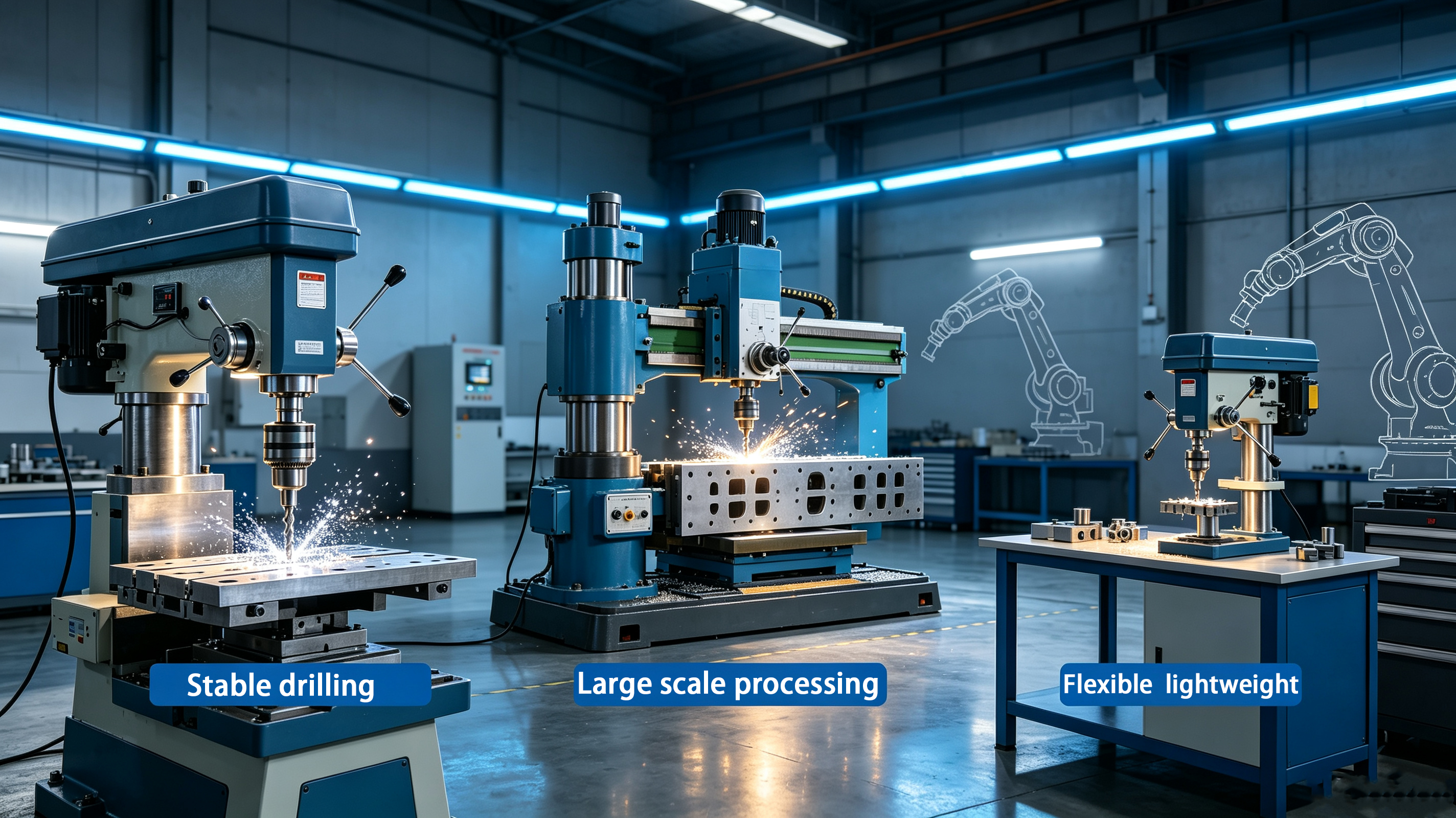
Applicable work-piece sizes & application scenarios of three drilling machines
The size and shape of the workpiece are important when choosing between a vertical drilling machine, radial drilling machine, and table drill machine. A table drill is generally a good fit for small and lightweight parts that can be placed easily on its worktable. It is often used for brackets, small plates, hardware parts, and repair jobs. A vertical drilling machine is better suited to medium-sized workpieces that need more drilling power and a larger working area. It can handle items such as steel plates, flanges, machine components, and fabrication parts.
A radial drilling machine is usually chosen when the workpiece is large, heavy, or difficult to move. Its adjustable radial arm allows the operator to position the drill head over different areas of the component. Large steel frames, castings, machine bases, pressure vessel parts, and structural components are common examples. Instead of moving a heavy workpiece several times, the operator can secure it once and adjust the machine around it.
For example, a small repair workshop making holes in 10 mm steel brackets may find a table drill simple and convenient. A general machine shop producing medium-sized flanges may prefer a Milling Machine & vertical drilling machine because it provides more working space and drilling power. A heavy fabrication shop working on a large steel base may benefit from a radial drilling machine because moving the base between drilling operations would take considerable time and effort.
Before selecting a machine, measure the largest workpiece you expect to process. Check its weight, length, width, height, hole positions, and required drilling diameter. The machine should provide enough table space, spindle travel, and working clearance without forcing the operator to work at the edge of its normal range.
Sumore Machinery, founded in 2001, provides a full machinery supply chain covering R&D, manufacturing, and global trade. Specializing in power tools, woodworking and metal processing machines, we support worldwide partners with reliable products and long-term cooperation.


