

 AR
AR BG
BG CS
CS NL
NL FI
FI FR
FR DE
DE EL
EL HI
HI IT
IT JA
JA KO
KO PL
PL PT
PT RU
RU ES
ES SV
SV IW
IW ID
ID UK
UK VI
VI HU
HU TH
TH TR
TR FA
FA
A metal manual surface grinding machine is useful when a metal part needs a flat, smooth, and accurate surface without setting up a large automated system. It is commonly used in small workshops, repair shops, tool rooms, and maintenance departments where operators handle different types of parts every day. For example, a technician may need to correct a slightly uneven steel plate, smooth a machined component, or restore the surface of an old tool. By adjusting the worktable, Grinding Machine , and feed by hand, the operator can remove a controlled amount of material and check the result as work progresses. This makes the machine practical for small batches, repair work, and jobs that require careful operator control.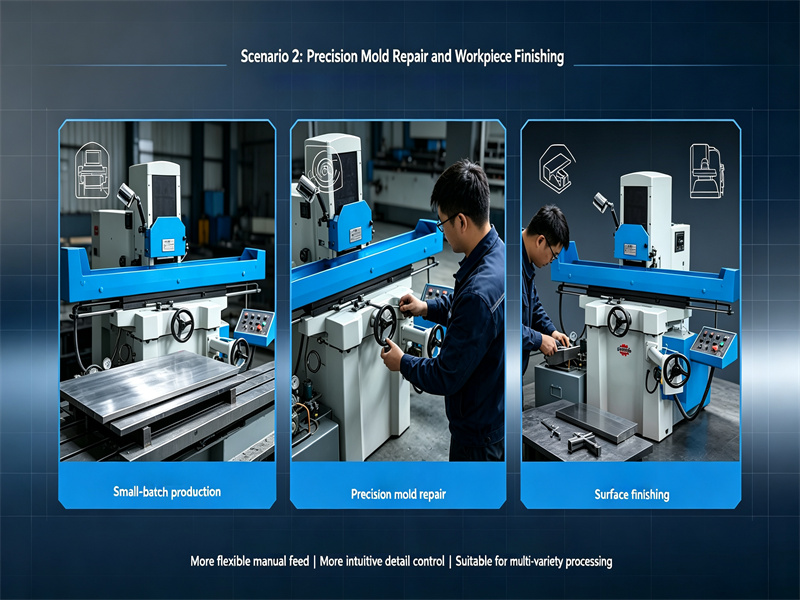
The core machining function of a surface grinder
The primary function of a manual surface grinding machine is to create a flat and smooth surface on the metal part that also ensures dimensional accuracy. While performing its function, the metal piece is secured on the worktable, whereas the grinding wheel turns at a high speed and cuts away an insignificant layer of metal. The movement of the table and the grinding process depend on the condition of the metal part and its required dimensions. Several shallow passes should be done instead of one heavy one. For instance, in case a steel plate has a rough or uneven surface as a result of milling, the surface grinding will fix high areas and provide an even surface.
The use of manual surface grinding machines in equipment maintenance
Manual surface grinding machines are often used in equipment maintenance when a metal part has become worn, uneven, or damaged during regular use. Instead of replacing a usable component, a technician can sometimes grind its surface back to the required condition. This is useful for repair shops, machine maintenance departments, and factories that handle their own equipment repairs.
For example, a steel mounting plate may develop uneven areas after years of repeated installation and removal. The technician can clean the part, check its flatness, secure it properly on the grinding table, and take several light grinding passes. After each pass, the surface can be checked with a measuring tool. This controlled approach helps avoid removing too much material.
The machine is also useful for restoring small tooling parts, guide plates, machine bases, spacers, and other components that need a flat contact surface. When working on an old part, always check its original dimensions before grinding. If the part has a coating, hardened layer, or special surface treatment, confirm whether grinding is suitable before starting.
For maintenance work, operator control is one of the main benefits. Different parts may have different levels of wear, so the operator can adjust the grinding depth and table movement as the job progresses. Keeping the workpiece clean and securely clamped is also important because dirt or movement can affect the final result. For small repair jobs where accuracy matters but full CNC production is unnecessary, a manual surface grinder can be a practical workshop tool.
Manual grinding machine is suitable for small workshops and private workshops
Manual surface grinding machines can be a practical choice for small workshops and private workshops because they are designed around hands-on operation. Many smaller shops do not process hundreds of identical parts every day. Instead, they may receive repair jobs, custom orders, replacement parts, or occasional machining work. A manual grinder fits this type of work because the operator can set up each job based on the size, shape, and condition of the workpiece.
For example, a small metalworking shop may receive an order to flatten several steel plates or correct the surface of a few machine components. Setting up a highly automated grinding system for such a small batch may not make sense. With a manual machine, the operator can secure the part, adjust the grinding wheel, and control the table movement directly. The same machine can then be prepared for a different job without a complicated production setup.
Space is another practical concern. Small workshops often have limited floor area, so machine size matters when planning the work area. Before buying or installing a manual grinder, measure the available space and leave enough room for loading parts, operating the table, and carrying out routine maintenance.
Operators should also pay attention to electrical supply, machine foundation, coolant handling, and safe access around the grinding wheel. A clean and stable working area makes daily operation easier. With proper setup and regular maintenance, a manual surface grinding machine can handle many small-batch and repair tasks without requiring a large production facility.
Manual surface grinding machine is used for teaching and skill training
Manual surface grinding machines are also useful in vocational schools, technical colleges, and training workshops where students need to learn basic grinding skills. Unlike highly automated equipment, a manual machine allows learners to see how each adjustment affects the workpiece. This makes it easier to understand important ideas such as grinding depth, table movement, wheel condition, workpiece setup, and surface finish.
For example, an instructor may give students a small steel block and ask them to grind one face until it reaches a specified thickness. The student first checks the original size, secures the workpiece, adjusts the grinding wheel, and takes light passes across the surface. After several passes, the student measures the part with a micrometer or vernier caliper. If too much material is removed, the student can see how a small setup or feed mistake affects the final result.
Manual operation also helps students develop patience and good working habits. They learn not to rush the grinding process and to check measurements regularly instead of relying only on appearance. Before practical training begins, instructors should teach students how to inspect the grinding wheel, wear proper protective equipment, secure the workpiece, and keep hands away from moving parts.
For beginners, simple flat workpieces are usually a good starting point. Once students become comfortable with basic movements and measurements, they can move on to more demanding jobs. This hands-on experience gives learners a useful foundation before they work with CNC grinding machines or more automated production equipment.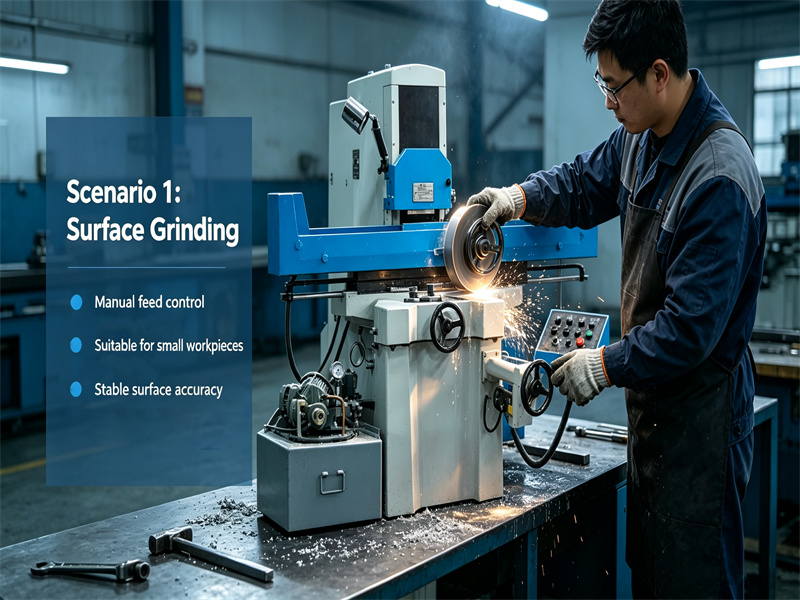
Surface grinding machine can process high-precision small parts
A manual surface grinding machine can be useful when small metal parts need accurate dimensions and a smooth, flat surface. Grinding removes very small amounts of material, allowing the operator to make careful adjustments instead of taking a large cut in one pass. This is helpful for parts such as spacers, thin plates, tool components, shims, and small fixtures where even a small size difference can affect how the part fits.
For example, a workshop may need to make a steel spacer that must fit between two machine components. After milling, the spacer may be slightly thicker than required. The operator can place it securely on the grinding table and remove a small amount from the surface. Measurements should be taken regularly with a micrometer or other suitable measuring tool until the required thickness is reached.
When grinding small precision parts, workpiece setup is especially important. The part must be held firmly and positioned so that it does not move during Other Machinery grinding. The grinding wheel should also be suitable for the material and kept in good condition. Using light grinding passes can help control heat and reduce the risk of damaging a thin or delicate workpiece.
Temperature should not be ignored either. Excessive heat can cause distortion or affect the accuracy of the finished part. Using suitable coolant, where appropriate, and allowing the workpiece to cool before final measurement can give more reliable results.
Manual surface grinding is not limited to large production jobs. With a skilled operator, careful measurement, and proper setup, it can handle many small parts that require close dimensional control and a clean surface finish.
Table of Contents
- The core machining function of a surface grinder
- The use of manual surface grinding machines in equipment maintenance
- Manual grinding machine is suitable for small workshops and private workshops
- Manual surface grinding machine is used for teaching and skill training
- Surface grinding machine can process high-precision small parts
Sumore Machinery, founded in 2001, provides a full machinery supply chain covering R&D, manufacturing, and global trade. Specializing in power tools, woodworking and metal processing machines, we support worldwide partners with reliable products and long-term cooperation.


